Senior Iranian and American officials began negotiations in Pakistan on Saturday (Apr 11), Iranian media reported, in a bid to bring to an end the Middle East war which plunged the region into violence and sent shockwaves through the world economy.
According to Iran’s state-run news agency, three-party talks with the US, Iran and Pakistan were started after a reduction in Israeli strikes on southern Lebanon and other Iranian preconditions were met.
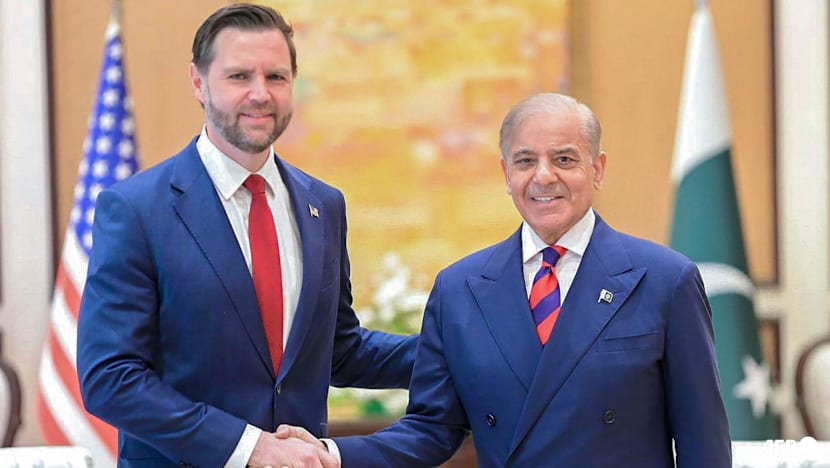
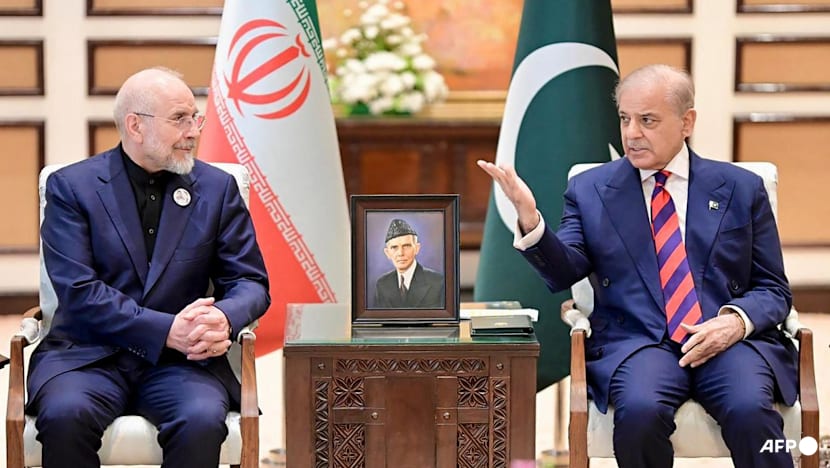
The talks – which the United States did not immediately confirm or comment on – came after US and Iranian officials met separately with Pakistan’s Prime Minister Shehbaz Sharif.
Both sides had arrived at Islamabad’s Serena Hotel when the Iranian delegation, led by parliamentary speaker Mohammad Bagher Ghalibaf, met Sharif.
US Vice President JD Vance, accompanied by White House envoy Steve Witkoff and President Donald Trump’s son-in-law Jared Kushner, met with the Pakistani prime minister afterwards.
“Commending the commitment of both delegations to engage constructively, the prime minister expressed the hope that these talks would serve as a stepping stone toward durable peace in the region,” Sharif’s office said.
“The prime minister reiterated that Pakistan looks forward to continue its facilitation of both sides in making progress towards sustainable peace in the region.”
Iran has previously said that any agreement on a permanent end to fighting must include the unfreezing of sanctioned Iranian assets as well as an end to Israel’s war against Hezbollah in Lebanon, which Vance has said will not be up for discussion in Islamabad.
The warring parties still appeared to be far apart on key issues – including sanctions, Lebanon and the opening of the strategic Strait of Hormuz – and made no attempt to hide their mutual suspicion.
“Our experience in negotiating with the Americans has always been met with failure and broken promises,” Ghalibaf said shortly after landing in Pakistan, according to Iran’s state broadcaster.
“MAKE OR BREAK”
Iran’s Foreign Minister Abbas Araghchi, who is also part of the delegation, told his German counterpart in a call on Saturday that “Iran enters negotiations with complete distrust due to repeated breaches of commitments and betrayals by the US”, the Tasnim news agency reported.
Vance said before leaving the US that if the other side was “willing to negotiate in good faith, we’re certainly willing to extend the open hand”.
But “if they’re going to try to play us, then they’re going to find the negotiating team is not that receptive”, he added.
The ceasefire is already under strain, notably from Israel’s continued strikes in Lebanon, which Iran and Pakistan insist is covered under the current truce.
Sharif, whose country’s down-to-the-wire mediation got both sides to the negotiating table this week, said talks would not be easy.
“An even more difficult stage lies ahead,” he said, referring to efforts to permanently end fighting that began with US-Israeli strikes on Iran on Feb 28, sparking Iranian retaliation against Israel and across the Gulf.
“This is that stage which, in English, is called the equivalent of ‘make or break.'”
“NO NUCLEAR WEAPON”
On the US side, Trump has demanded the opening of the Strait of Hormuz as a condition for the two-week ceasefire.
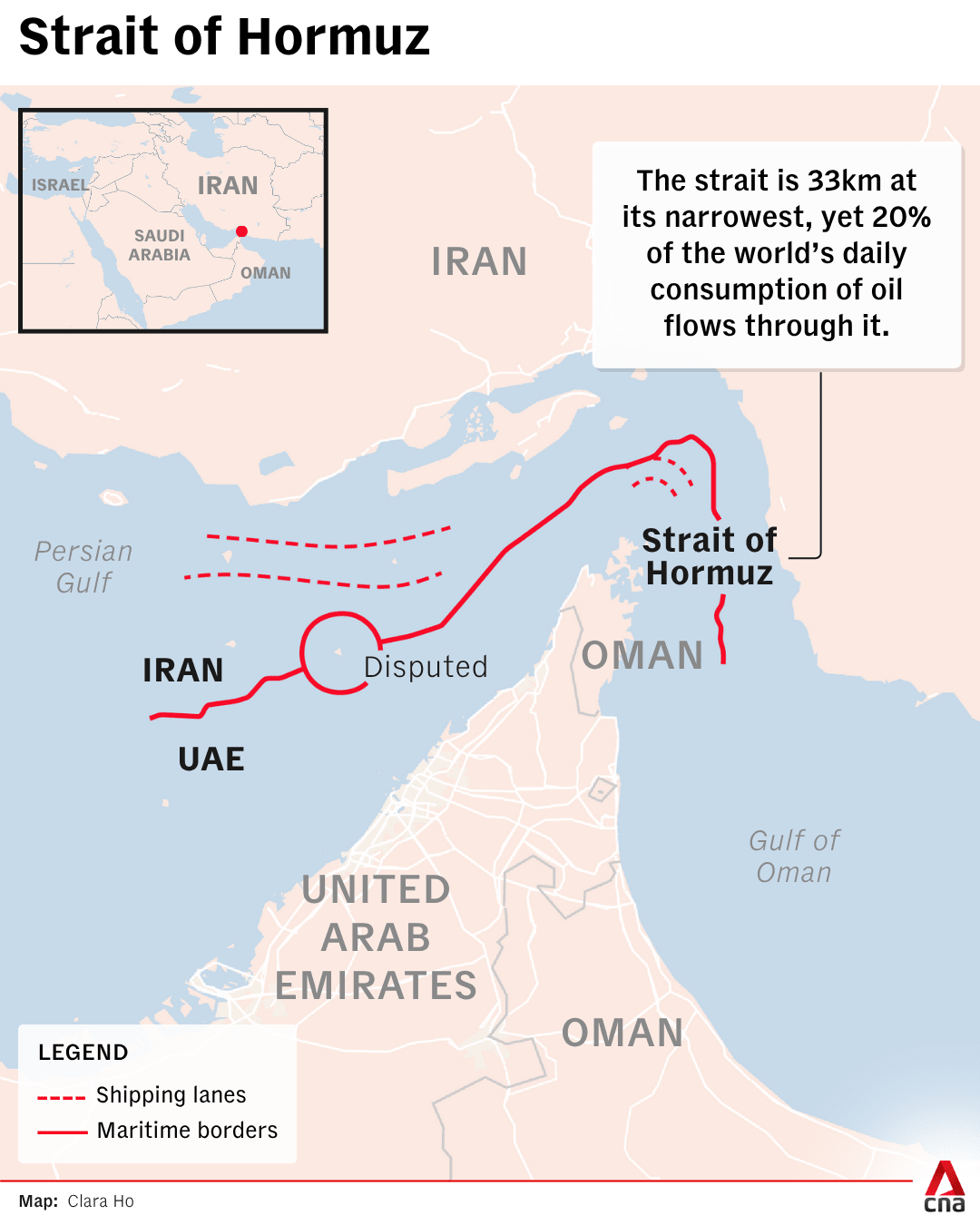
The strait, through which one-fifth of the world’s crude passes, has not reopened to normal traffic, however, and Trump vowed on Friday to have it open soon “with or without” Iran’s cooperation.
He added that his top priority at the Islamabad talks was to ensure the Islamic Republic had “no nuclear weapon. That’s 99 per cent of it”.
Security was tight in the Pakistani capital on Saturday, with a heavy police and paramilitary presence on the streets and road diversions around the “red zone” where government and diplomatic buildings are located.
Pakistan has formulated a team of experts to facilitate the two sides in negotiations on navigation, nuclear and other key matters, a diplomatic source familiar with the matter told AFP.
The negotiations will be closely watched by other key regional players, with Egypt and Turkey having helped with mediation, along with China, all of which Pakistan was still coordinating closely with for the talks, the source said.