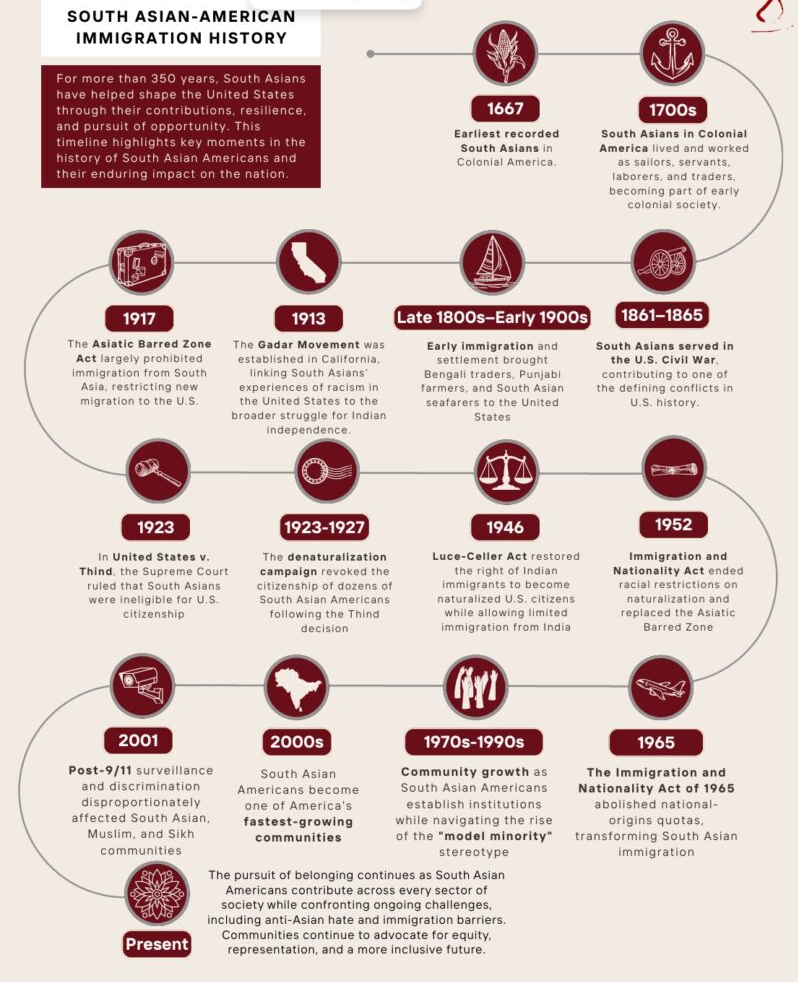
Historical records place South Asians in colonial America as early as 1667, more than a century before the United States declared its independence. Larger waves of migration began in the late 19th century, when Bengali Muslim traders traveled along commercial and tourist routes from New Jersey to New Orleans, selling textiles and other goods from the Indian subcontinent.
Around the turn of the 20th century, Punjabi immigrants, predominantly Sikhs but also Muslims and Hindus, arrived on the Pacific Coast, drawn by employment opportunities in agriculture, lumber and railroad construction. Many brought extensive farming experience from Punjab but found themselves confined to low-paying and seasonal jobs because of racial barriers. Applyfor Visas
The report includes a photograph from around 1906 showing Indian immigrants working on the construction of the Pacific and Eastern Railroad in Oregon. Another shows an Indian immigrant harvesting sugar beets in California in the early 20th century.
These largely forgotten images offer a striking contrast to the contemporary portrayal of Indian immigration as a relatively recent phenomenon driven by the technology industry.
The racial hostility these early immigrants encountered also helped shape a politically engaged Indian diaspora. In 1913, Indian immigrants established the Gadar Party in California, connecting their experiences of racism in North America with the struggle against British colonial rule in India. The movement brought together Sikhs, Hindus and Muslims in a common campaign for Indian independence.
But perhaps one of the most unsettling chapters in the report concerns an Indian immigrant who served in the U.S. Army and subsequently found himself fighting for the right to be an American citizen.
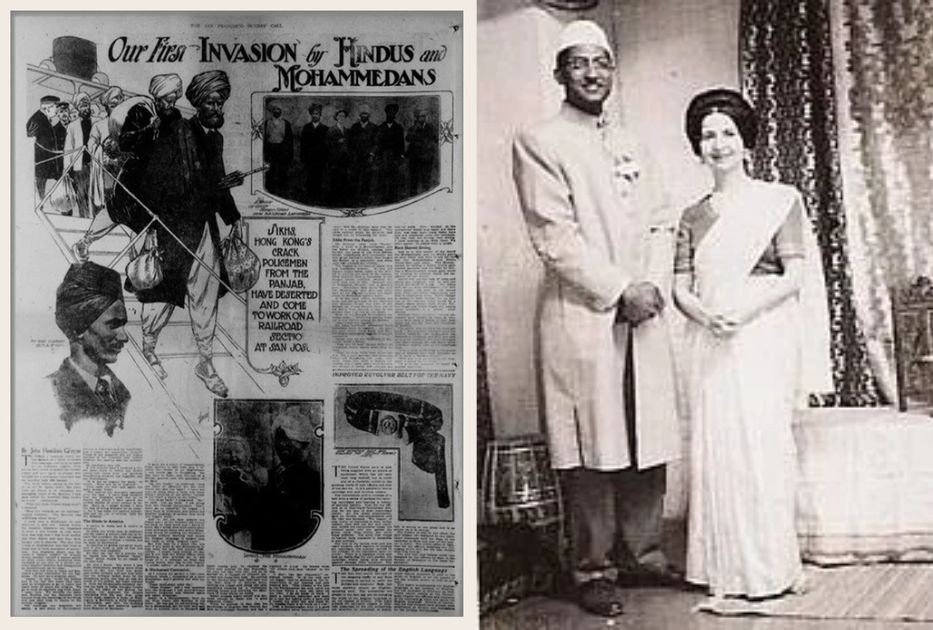
Bhagat Singh Thind, a Sikh immigrant from Punjab, had been granted citizenship twice by district courts, only to have the Bureau of Naturalization challenge his eligibility. His case eventually reached the U.S. Supreme Court.
In 1923, the court ruled that although Thind could be classified as Caucasian under prevailing anthropological definitions, he was not white in the commonly understood sense of the word and was therefore ineligible for naturalization under the racial restrictions of the time.
The court’s reasoning explicitly questioned the ability of people of Indian ancestry to assimilate into American society. Indianheritage books
“The children of English, French, German, Italian, Scandinavian, and other European parentage quickly merge into the mass of our population and lose the distinctive hallmarks of their European origin,” Justice George Sutherland wrote. “On the other hand, it cannot be doubted that the children born in this country of Hindu parents would retain indefinitely the clear evidence of their ancestry.”
The consequences extended far beyond Thind himself. According to the SAAPRI report, 65 South Asian Americans had their citizenship revoked between 1923 and 1927.
Meanwhile, the Immigration Act of 1917 and the Johnson-Reed Act of 1924 effectively closed the door to most immigration from the Indian subcontinent.
Cover photo credit:
Left: An article in the San Francisco Call, November 20, 1906. California Digital Newspaper Collection, Center for Bibliographic Studies and Research, University of California, Riverside.